Blind Spot Monitoring System
Protect the people closest to the vehicle.
The nearside, the kerb, the moment a cyclist comes alongside —this is where awareness matters most and a mirror helps least. Brigade detection systems watch these spaces and give the driver a clear, timely warning.
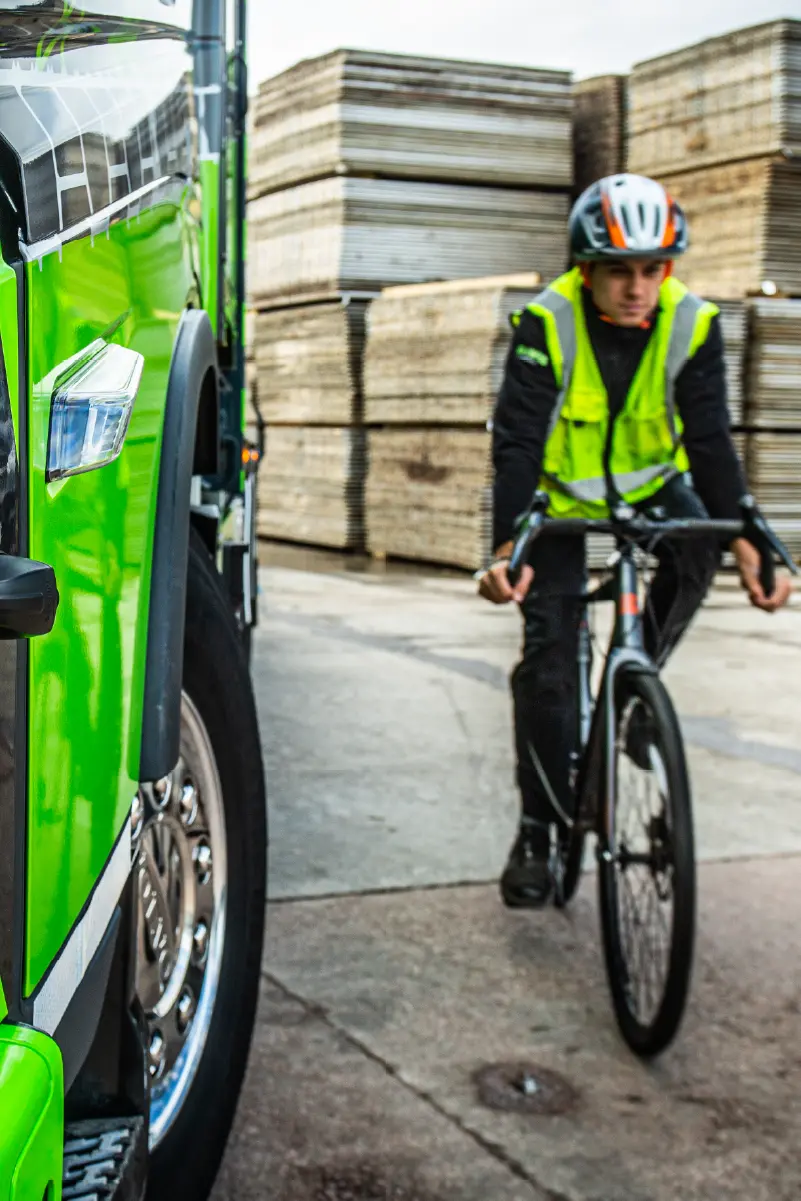
Cyclist detection without the false alarms.
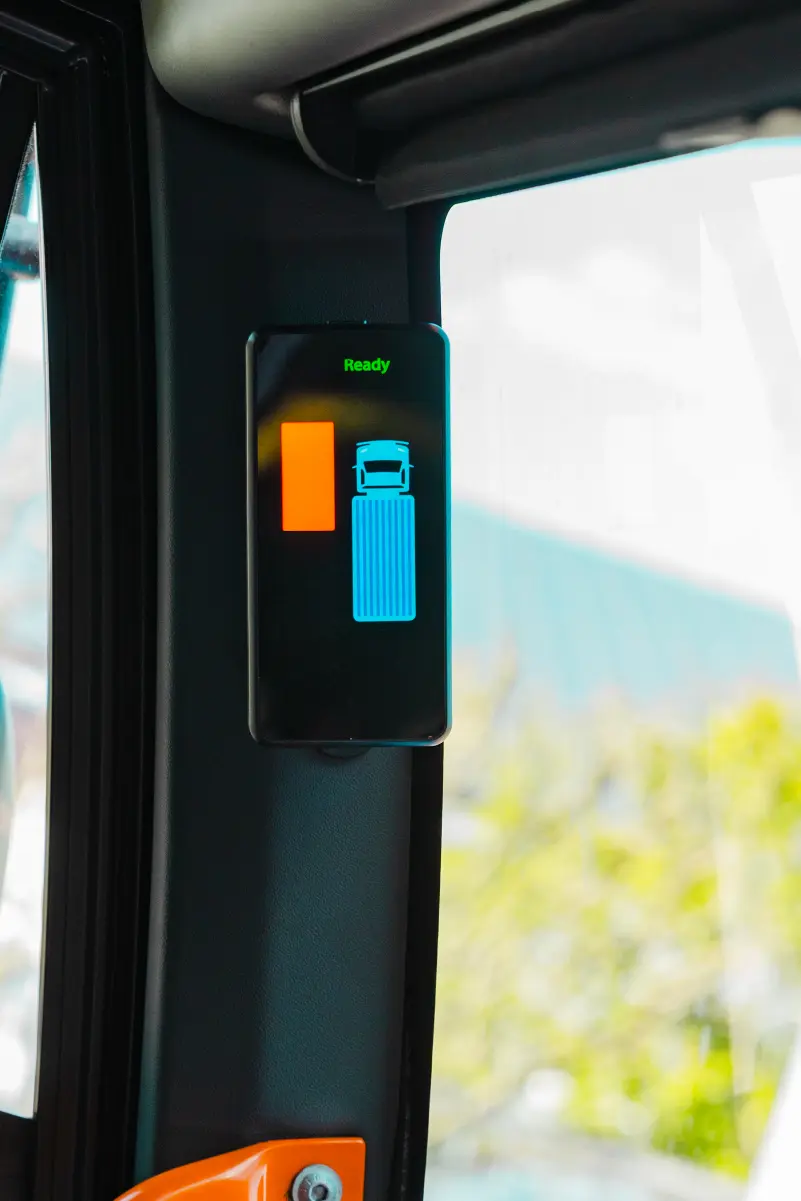
Know when a cyclist is in your detection zone. And know if the vehicle is on a path to meet one. All without the false alarms that get warnings ignored. Radar Predict understands the vehicle’s speed and direction – and the cyclist’s too. Complete coverage along the nearside, including the full trailer. It even teaches itself whether a trailer is attached, cutting the false alarms articulation usually causes.

Improved Awareness
Helps drivers stay aware in high-risk areas around the vehicle.

Supports Compliance
Aligns with safety regulations and industry requirements.

Reduced Distraction
Minimises unnecessary alerts to help maintain driver focus.

Reliable Performance
Delivers consistent operation in demanding environments.
360° awareness.
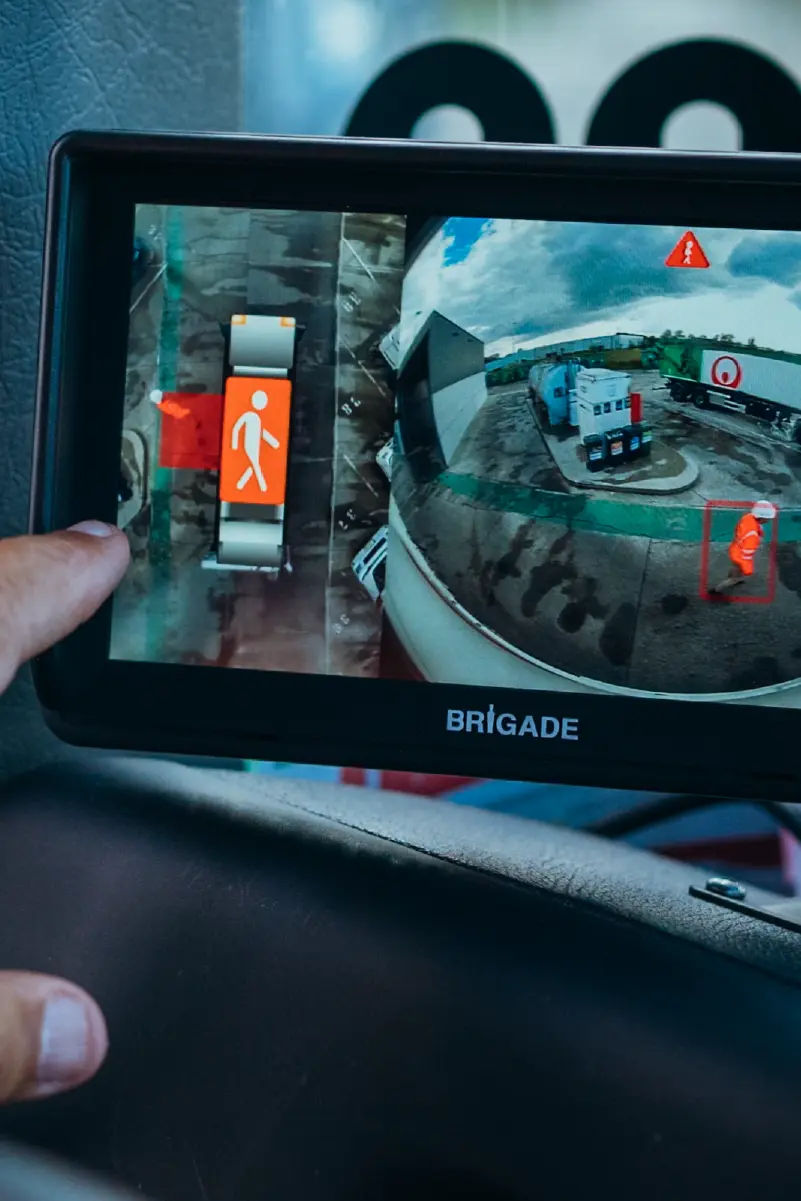
For the whole vehicle, Backeye®360 and Backeye®360 AI give the driver a complete surround view – with AI detection that picks out people close to the vehicle and flags their position in real time. Detection events flow into Haloniq, recorded and reviewable.

Eliminates Blind Spots
A complete view around the vehicle helps drivers monitor areas that may not be visible using mirrors alone.
Improved Driver Awareness
AI-powered pedestrian detection provides additional awareness of people around the vehicle.
Built for Demanding Environments
IP69K-rated cameras are designed to perform reliably in challenging weather and operating conditions.

Reduced Driver Workload
A single integrated display removes the need to monitor multiple camera screens.
Safety Technology That Works Together
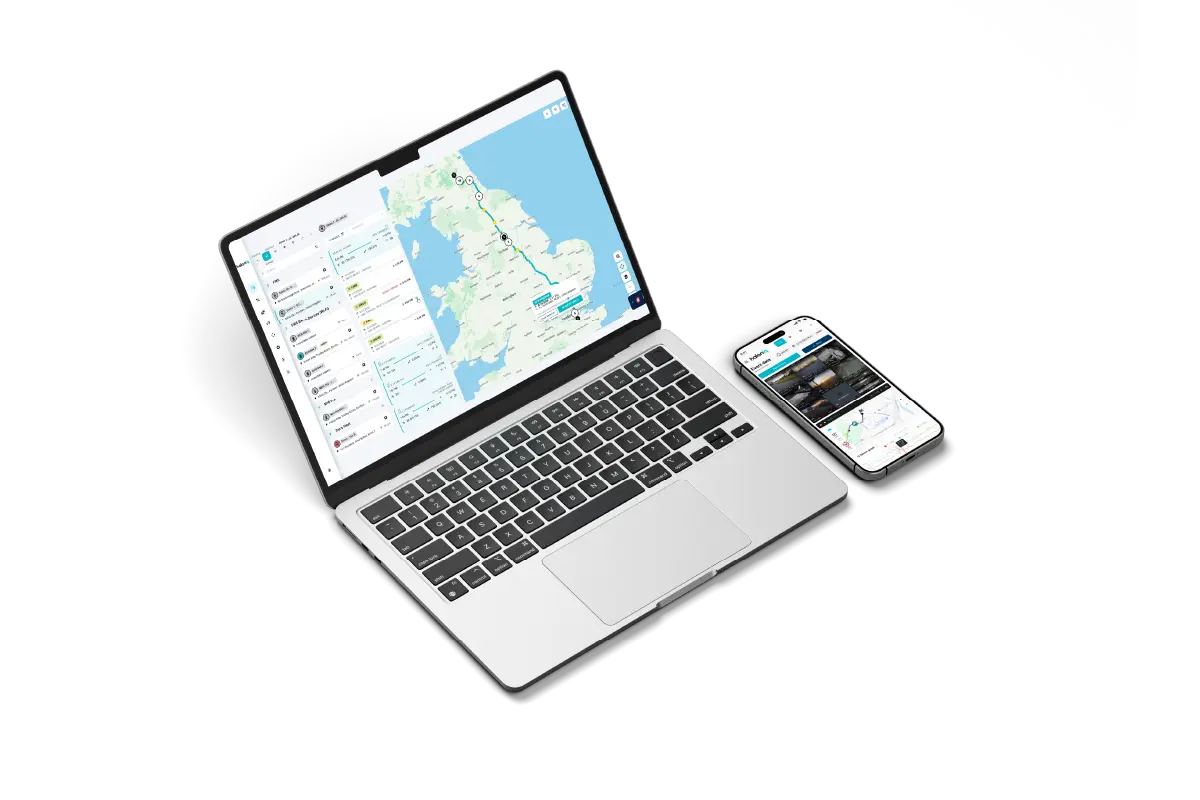
Discover complementary safety technologies designed to support drivers, improve awareness and deliver connected insights through Haloniq.
Forward-facing Cameras
A Brigade Mobile Digital Recorder captures the footage that turns uncertainty into a clear, reliable record when it matters most.

Mobile DVRs
A Brigade Mobile Digital Recorder captures the footage that turns uncertainty into a clear, reliable record when it matters most.

Multi-channel Cameras
Multi-channel camera systems provide a complete view around the vehicle, helping drivers see more and ensuring every angle is captured when it matters.

Monitors
Brigade in-cab monitors bring multiple camera views together in one clear display, helping drivers stay aware of their surroundings when it matters most.

ADAS & DMS
Brigade ADAS and DMS cameras help drivers stay aware of hazards on the road ahead while supporting attention and focus throughout the journey.

Frequently Asked Questions
Learn more about blind spot monitoring systems.
How do blindspot and cyclist detection systems for vehicles work?
More advanced systems use intelligent algorithms to assess the speed and direction of both the vehicle and the detected object. This helps identify potential collision risks while reducing unnecessary alerts. Brigade’s Radar Predict system uses AI-powered radar technology to distinguish between moving and stationary objects and supports blind spot monitoring along the side of the vehicle.
Why are blindspot detection systems for vehicles so important?
Blind spot detection systems help drivers become aware of vulnerable road users and obstacles that may not be visible through mirrors or direct vision alone.
Improved Vulnerable Road User Protection
Helps drivers identify cyclists and pedestrians travelling close to the vehicle, particularly in urban environments.
Enhanced Driver Awareness
Provides timely warnings when a road user enters a monitored blind spot area, helping drivers make safer decisions.
Reduced Collision Risk
Supports safer turning, lane changes and low-speed manoeuvres where blind spot incidents are most likely to occur.
Supports Regulatory Requirements
Can help fleets meet blind spot monitoring requirements where legislation or industry standards apply. Compliance depends on the complete vehicle specification, installation and applicable regulations.
Increased Driver Confidence
Gives drivers greater awareness of their surroundings and additional support in challenging driving environments.
Camera vs radar blindspot and cyclist detection for vehicles
Both camera and radar systems can help improve blind spot awareness, but they use different technologies and offer different advantages.
Camera-Based Blind Spot Detection
Camera systems provide a visual image of the area around the vehicle and may use artificial intelligence to identify pedestrians and cyclists. AI-enabled systems can recognise human forms and highlight detected people on-screen, helping drivers understand what is happening around the vehicle.
Radar-Based Blind Spot Detection
Radar systems detect the presence, speed and direction of objects using radio waves. They can continue operating in conditions where visibility may be reduced by darkness, rain, fog or glare. Advanced radar systems can also assess whether a collision path is developing and provide graduated warnings. Brigade’s Radar Predict technology analyses the movement of both the vehicle and cyclist to help reduce false alarms.
Which Is Better?
The best solution depends on the application. Camera systems provide visual context, while radar systems excel at object detection and movement analysis. Many fleets choose integrated solutions that combine camera and radar technologies to improve driver awareness and provide a more complete blind spot monitoring system.
See your fleet through one lens.